Abstract
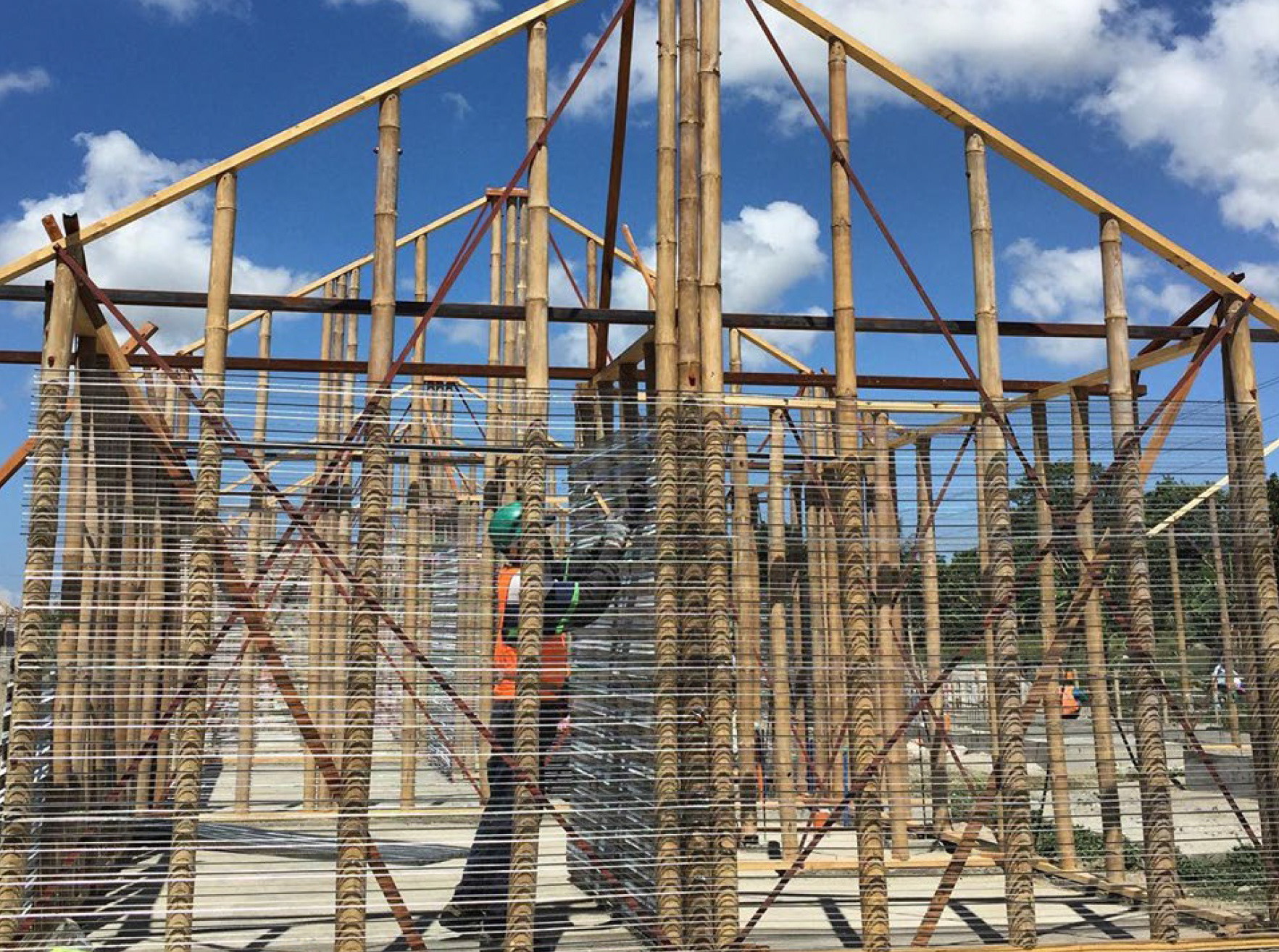
Composite bamboo shear walls (CBSW) are modern engineered vernacular-improved shear walls, that build upon the traditional Latin American wattle-and-daub construction technique known as bahareque, and engineer it using modern materials and construction techniques. CBSWs consist of a frame made of timber and/or large diameter bamboo, upon which a matrix, made of different materials such as cane, small diameter bamboo, flattened bamboo, bamboo laths or expanded steel mesh, is nailed. The frame and the matrix are then finished with cement or lime render to form solid shear walls. Over the past 30 years at least 4000 one and two-storey homes utilising modern CBSWs have successfully been constructed in various countries around the world, including Costa Rica, Colombia, Nepal, Ecuador, Peru, Mexico, El Salvador and the Philippines. When properly designed and built, they have demonstrated their effectiveness as an affordable, hazard-resilient, low-carbon and durable form of housing. The system is now codified in the Colombian, Ecuadorian and Peruvian national structural standards, as well as in ISO 22156. This paper reviews the results of monotonic and cyclic shear tests of full-scale CBSW specimens conducted in Colombia, Costa Rica, Mexico, the Philippines and London. The tests were interpreted in a consistent manner following ISO 21141, so that preliminary values of stiffness, strength and ductility values could be determined and evaluated. Similar tests have been grouped together and the results averaged such that the different behaviour of the subsystems and variables can be better determined. The results demonstrated that CBSW systems have reasonable strength, stiffness, and potentially significant ductility, although these characteristics varied widely depending on the specific subsystem , the specimen lengths, the test setups and the boundary conditions. Further tests are required to determine more reliable properties for design, and this paper provides some recommendations for future testing.
Accessible here
Accessible here